
23
by viqaiq
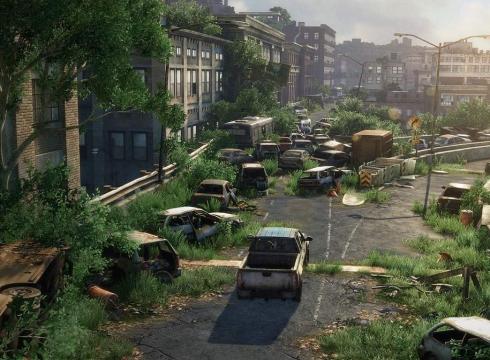
Q. In what museum do you think this work of art is displayed?
A. This is a bit of a trick question since this is a screen shot from Naughty Dog’s video game The Last of Us.
Recently, the Supreme Court ruled that video games are art and deserve the same first amendment rights as other art forms.
Quoting from the court’s decision,
“Like the protected books, plays, and movies that preceded them, video games communicate ideas — and even social messages — through many familiar literary devices (such as characters, dialogue, plot, and music) and through features distinctive to the medium (such as the player’s interaction with the virtual world). That suffices to confer First Amendment protection.”
The Last of Us is a survival game set in a surreal, often disturbing and sometimes strangely beautiful post-apocalyptic landscape. Documentary and fine art photography has changed our understanding of and relationship to landscape. A huge range and variety of images of war, natural disaster and environmental degradation and collapse are now deeply rooted in our collective conscious. It is not hard for us to conjure up definitive images from 9-11, Katrina, the tsunamis in India and Japan, or even of more distant but always resonate images from Hiroshima, Nazi death camps or even Vietnam. Features of these destroyed landscapes appear more frequently in a variety of art forms, in video games, for example, and in the constructed landscapes of films like Silent Hill, I am Legend, Contagion, Children of Men and The Road.
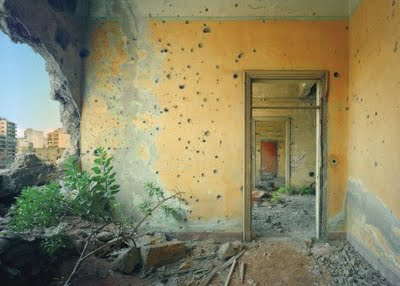
Many fine art photographers have worked in a wide range of destroyed landscapes. Note below the similarities between screen shots from The Last of Us and photographs by Robert Polidori of Pripyat after the Chernobyl disaster. The chilling difference, of course, is that the images in the game are of a city after a virtual disaster and Polidori’s photographs are evidence of real disaster. Perhaps this is the compelling nature of the game. Since these landscapes now seem eerily familiar, do we, on some level, view the game as preparation for what we have come to believe is inevitable? Video games are a particularly interesting art form since our interaction determines outcome – a feature that is likely to be transferred to many other forms of moving image experiences in the future.

 viqaiq.com