
25
by viqaiq
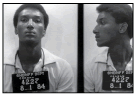
Q. This mug shot played a critical role in convicting an innocent man to life plus 50 years in prison. Who is this man and how did this mug shot change the way police conduct suspect identifications?
A. This is a mug shot of Ronald Cotton, a man wrongly convicted of rape in 1984. The victim positively identified Cotton based on his very distinct facial features (a long thin nose and high eyebrows). While Cotton was in jail, inmates began to confuse him with another man, Bobby Leon Poole, as the two men looked very similar. Cotton began to suspect that Poole was the real attacker and DNA tests later confirmed that Cotton’s suspicions were correct. The victim identified Cotton from a mugshot because he resembled her attacker, however, she selected him from a group of photographs of men who did not also have the distinct facial features she remembered. She inadvertently transferred Poole’s facial characteristics onto Ronald Cotton because his was the only mugshot she was shown of a man with a long thin nose and high eyebrows. In the state of North Carolina, police must now show witnesses lineups of individuals with comparable facial features and must indicate that mug shots may or may not include the suspect. For more on this case read Picking Cotton by Jennifer Thompson-Cannino and Ronald Cotton.
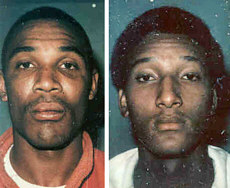
Below, comparative mug shots of the actual attacker Bobby Leon Poole (on the left) and Ronald Cotton (on the right).
A significant and growing area of research is being done on the practice of suspect identification. It turns out that visual memory is not as reliable as we think. We may merge memories, transfer details, omit details, focus on the trivial, or have difficulty making distinctions between like things after the fact. For example, we may remember that a getaway car was blue but it might be hard for us to pick out the right make and model when we have a range of blue cars to choose from. Memory can be affected by age, fatigue, predisposition to events or people, and traumatic and casual events are remembered with different levels of clarity.
Cases like the one above have had a major impact on the way law enforcement approaches suspect identification. There are a number of simulated eyewitness tests that have been developed which assess visual memory (one is available at the Picking Cotton website). If you have the time, test your ability to identify a suspect, the results may surprise you.
 viqaiq.com