
28
by viqaiq
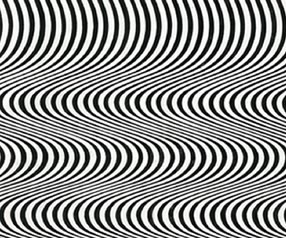
Q. The painting above by Bridget Riley (Current) and the piece below, referred to as the Ouchi Illusion, after the designer Hajime Ouchi, have something in common. What is it?
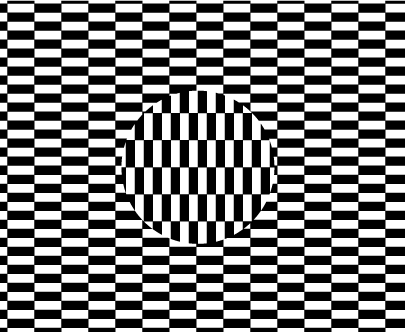
A. Both pieces challenge normal visual perception and both are extensions of abstraction. Notice that there is movement in these still pieces (which are not computer generated) and that they illicit a visceral experience when stared at a for any length of time. The “Op” in “Op Art” refers to the purely “optical” or “optic” nature of these pieces. Although Op Art was co-oped by the fashion world in the 60’s, and somewhat debased as a result, it is a culturally and artistically interesting movement. As noted by Sarah K. Rich in Artforum “compositional instability allegorized social flux. As objects changed and moved, viewers were coaxed into envisioning a society likewise capable of transformation.”

 viqaiq.com