
44
by viqaiq
Q. What is the normal range of the human eye?
A. For people with 20/20 vision, it is a depth of about 20 ft. and a width (in focus) of about 50-70 mm. Landscape and architectural photographers are able to show us broad and long views with incredible precision and clarity that are beyond what we could see with our own eyes. This is made possible by the use of a combination of highly specialized wide-angle lenses and manipulation of aperture value to create extreme (in focus) depth of field.
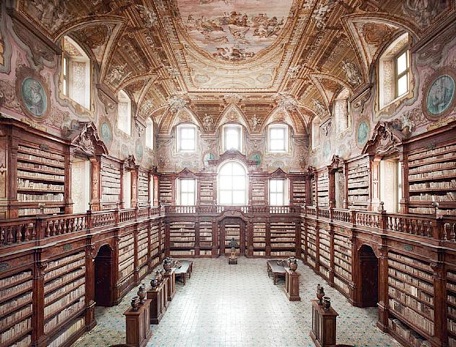
The photograph above is by Candida Hoffer. Hoffer has photographed the interiors of many grand architectural spaces – libraries, museums and places of style and luxury, including palaces and opera houses. These rooms are, however, strangely empty and seem to remain suspended in time as a result. Her treatment of space, color and light is both grand and poetic but we do, at times, get the feeling that we are looking into a gilded cage, or at an exotic bird that will never be let free. We are allowed to look into these detailed interior spaces with uncanny access but they remain, strangely enough, out of reach.
I believe there is a clue to understanding Hofer’s architectural interiors in another of her photographic series of the interior landscapes of European zoos, entitled Zoologische Garten. Unlike her architectural photos, there are living creatures in these idealized, constructed landscapes and her emotional and intellectual narrative is much more accessible. In viewing a variety of exotic creatures in their cages, we become more aware of our interaction with and expectations of interior space, its profound effect on us, and the ways we as an audience willfully engage in visual fantasy. This is an immensely poetic study of the very real tension that exists between reality and our romantic notions of space and time.

 viqaiq.com
