
51
by viqaiq
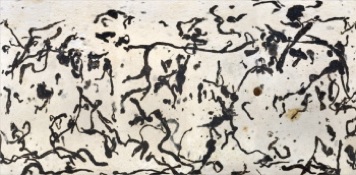
Q. Where is this pattern found and what does it communicate?
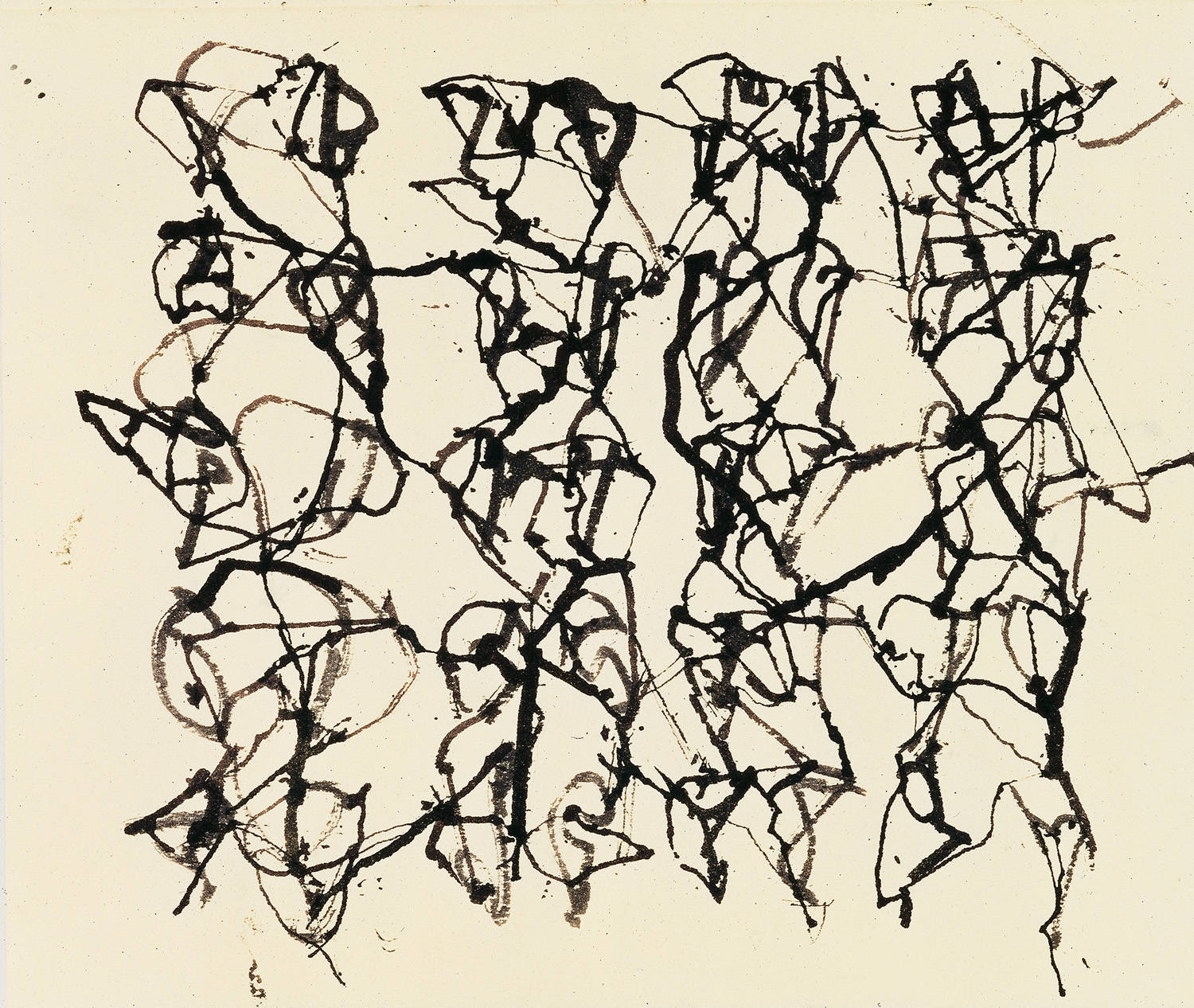
A. It is the pattern on a bird’s egg, the egg of the Common Murre to be exact, and below it is a drawing by Brice Marden (10, from the series Cold Mountain Studies). They look similar, don’t you think?
In her book, A Primer of Visual Literacy, Donis Dondis points out that line communicates essential information (based on our intuitive need for balance as we stand and see the world vertically on a horizontal axis). When balanced, line direction can create the feeling of simplicity, order, regularity, and symmetry (which is visually pleasing and calming) or it can alternatively create complexity, instability, disorder, stress and irregularity (which is perceived as active and destabilizing). This is the difference in experience we get when we look at a perfect spiral of a sea shell as opposed to looking at the fracture patterns of cracked ice.
Marden’s treatment of line is particularly intersting as it has both characteristics. It is active but it is also regular. The line travels, appears to be on a quest of some sort, searches, and essentially finds itself and re-merges again and again. It is actually more regular than the natural pattern on the bird’s egg. Marden’s line associations are rather intellectual and spiritual for what might be viewed as a simple abstraction. This is an example of the way that line can communicate deep meaning.
Natural patterns and textures are infinitely variable and fascinating and our familiarity with their compositional elements helps inform artistic narrative (whether pattern is intricate or bold, or textures are smooth or rough, we have strong visual and intellectual associations with these elements). Just as pattern creates movement and direction as the eye follows, retraces and attempts to understand the direction of the regular or irregular line, texture allows viewers to optically touch what they intuitively want to better understand.
 viqaiq.com