
7
by viqaiq

Q. What visual assumptions do you make everyday?
A. Our visual assumptions are intuitive and developed from our lived experience of natural phenomena. These are, for example, assumptions of scale (mice are smaller than men), assumptions of light direction (sunlight comes from above not below), assumptions of motion (feathers fall more slowly than rocks), and assumptions about spatial relationships (objects moving away from us become smaller). Visual assumptions are intertwined with and are informed by a variety of other perceptual assumptions (fur is soft and sandpaper is rough, jackhammers are loud and butterflies are silent), for example.
Artists can play with these ingrained perceptual experiences in ways that are humorous, like the artist Claes Oldenburg (above) who whimsically disrupts scale by turning small, mundane objects into larger than life sculptures. Ice cream cones aren’t as big as buildings – are they?
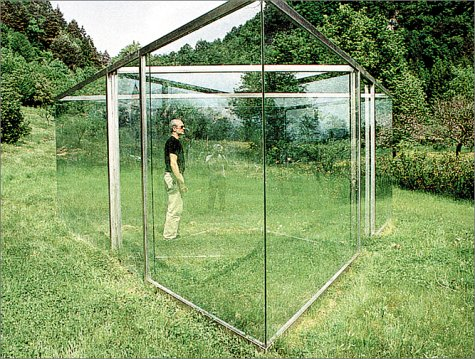
Dan Graham’s architectural “pavilions” (below) are made of materials that are both reflective and transparent, curved and angular, and function like interactive mazes that challenge our assumptions of space, our place in that space, and our relationship to it and others. By disrupting what we expect and often take for granted, visual narrative is pushed into the realm of metaphysics and all that we assume about the world and ourselves is called into question.
 viqaiq.com