
75
by viqaiq
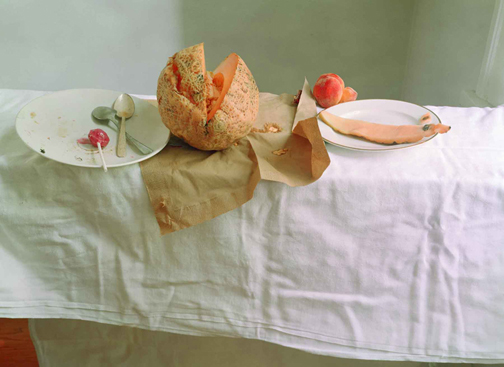
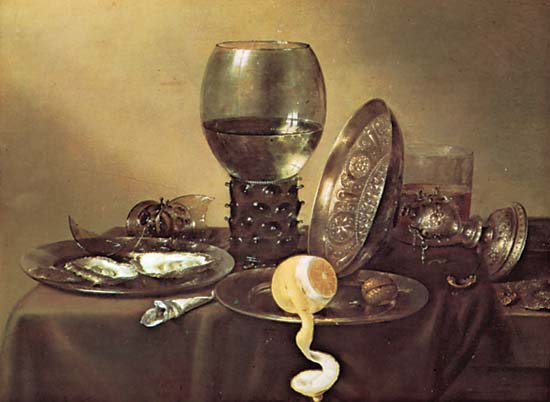
Q. The photographer Laura Letinsky is referencing a tradition in still life painting called vanitas. Compare the vanitas painting by Willem Claez Heda below with Letinsky’s photograph above. What elements are the same?
A. The tradition of vanitas painting is based in symbolic reference to the transient, fleeting nature of life and the inevitability of death. Vanitas paintings, like the one by Heda below, often contain fruit, flowers, glass objects, and may also include musical instruments (as symbols of pleasure). There are usually overt references to either time or death, in the form of clocks, skulls and hourglasses. The combination of these objects is meant to reference both pleasure and pain, life and death. In the painting below, the lemon is unpeeled, the perfect bubble of glass is broken and a goblet has been tipped over. The lemon and seafood also reference things that can be viewed simultaneously as both sweet and acrid. Someone has dined at this table and we are left to view their beautiful remains.
Letinsky’s photograph above has similar references. She is showing us a table, also covered with a cloth, and someone has already eaten here (there is an empty plate and a slice of melon is gone). Although there is no overt reference to death (like a skull or clock) we are looking at fruit that is no longer ripe and at the remains of a meal. The beautiful orange sucker (which provides a perfect color balance to the melon) may be Letinsky’s modern reference to pleasure. There is enough similarity to believe that her compositional choices are based on the vanitas tradition of still life painting.
 viqaiq.com