100 Questions Designed to Boost Your Visual/Arts Intelligence Quotient

Category: Uncategorized

41

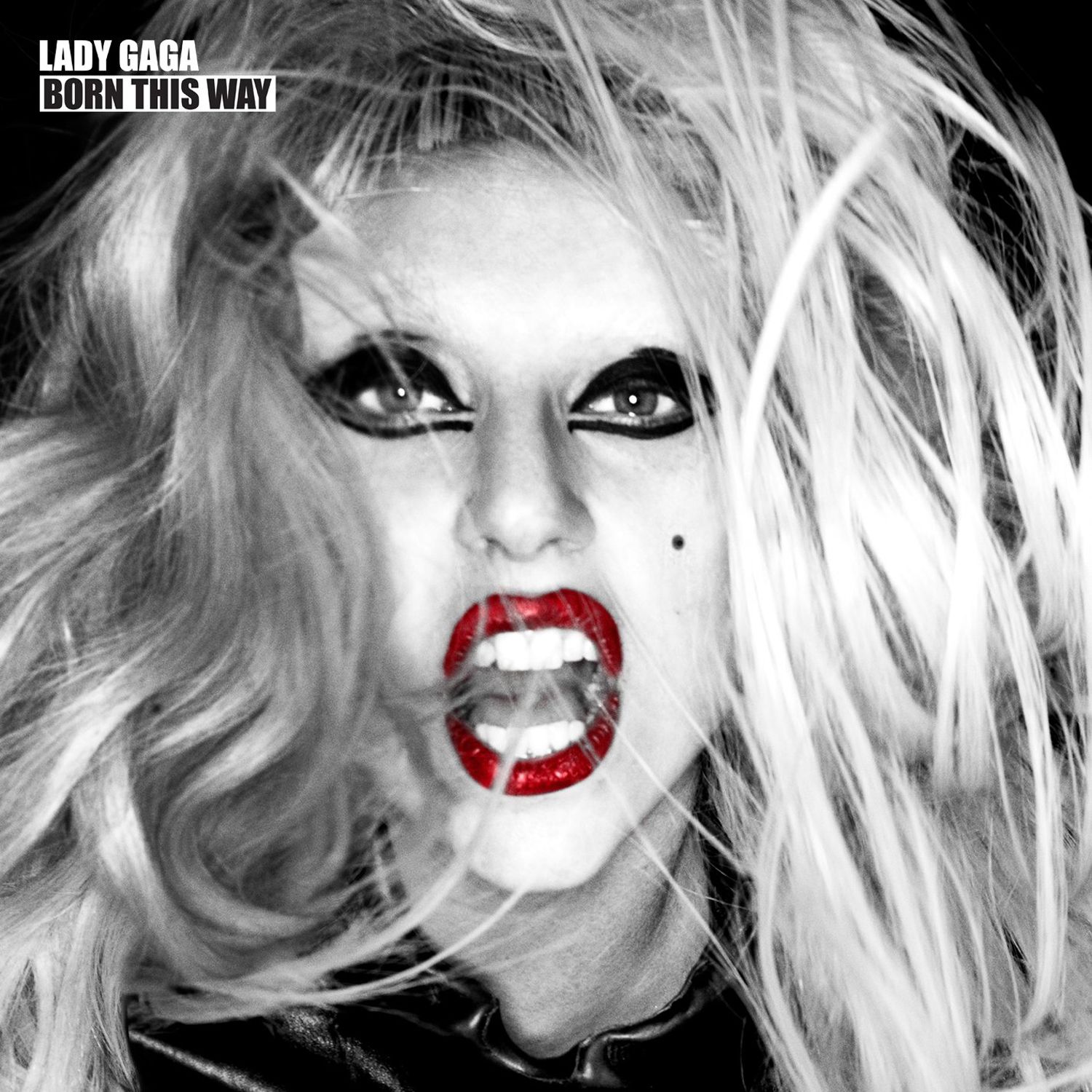
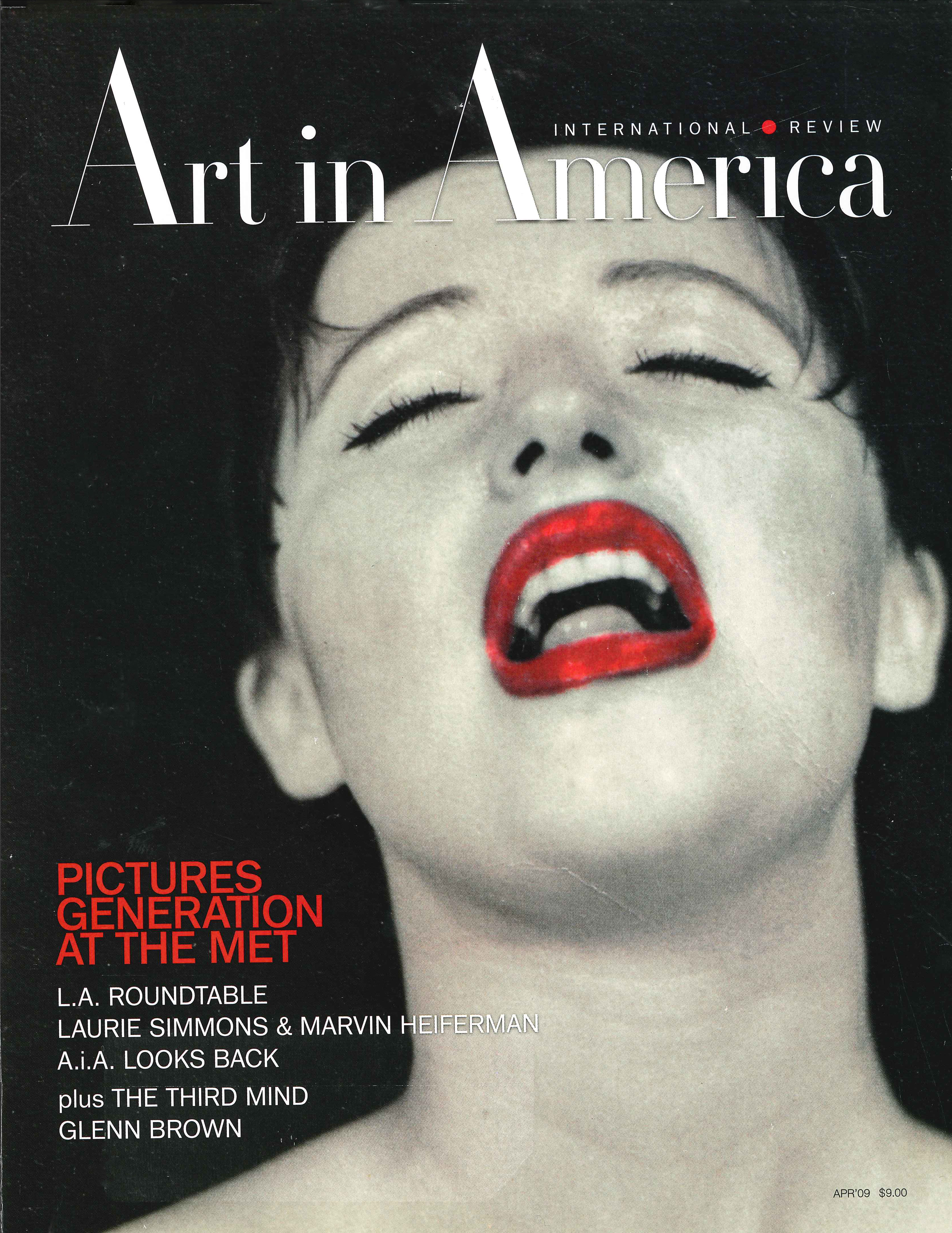
Q. This is the cover of Lady Gaga’s album, Born This Way, and below it is a still from a video by the photographer Cindy Sherman. What elements are similar?

A. Many elements are similar, including the ashen face, open mouth and of course the very, very red lipstick. Popular culture often references fine art in ways that we’re not aware of. Fine art images are often co-opted, softened, or re-contextualized so that they can be delivered to new audiences. Cindy Sherman’s work is about constructed identities, so it follows that an entertainer who shifts identity might find inspiration in her work.

42

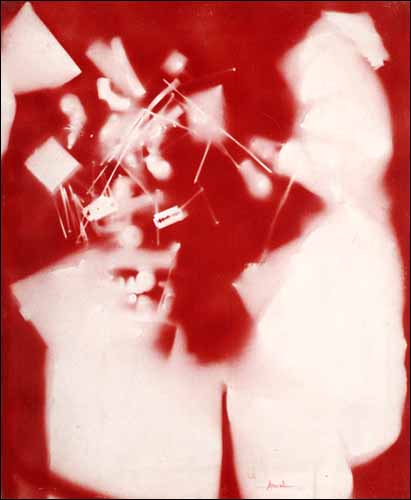
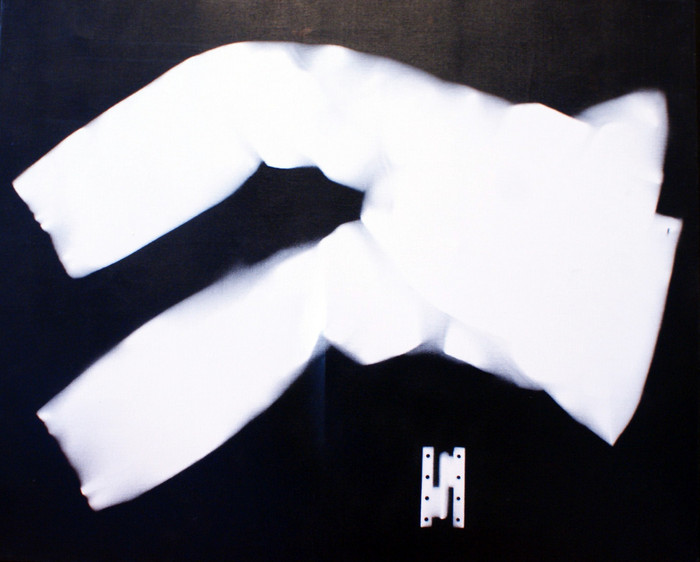
Q. What is positive and negative space?

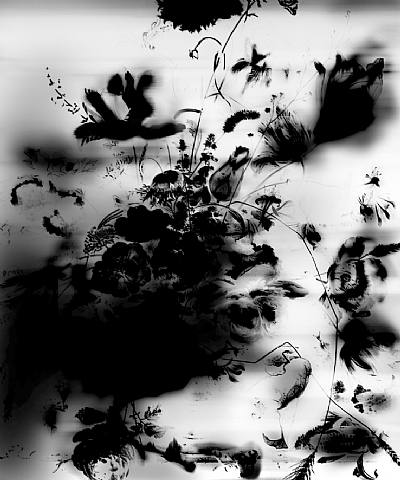
A. Positive space is the area occupied by the main subject and negative space is the surrounding area (or the background).  These paintings by Francois Arnal play very effectively with positive and negative space. They were made by laying objects down on canvas (notice the shapes of razors and hinges among the softer shapes made by fabric), and then applying paint over them so that the shapes leave a ghost-like impression. The main image area (normally considered positive space) is white and vacant in these paintings, giving the impression that we are looking at an x-ray. Arnal has made a very clever space exchange by disrupting our experience of occupied and unoccupied space. These paintings call our attention to invisible interior spaces  (like the change in your pocket or the organs inside your body). Just because we cannot see them, does not mean that they are not there.

Here is another painting by Uwe Wittwer, Still Life Negative, which plays very beautifully with positive and negative space. Because the negative space is emphasized, we get the feeling that we are looking at the soul or afterlife of a bouquet, rather than the bouquet itself.

43

Q. What’s the difference between a linear and non-linear narrative?

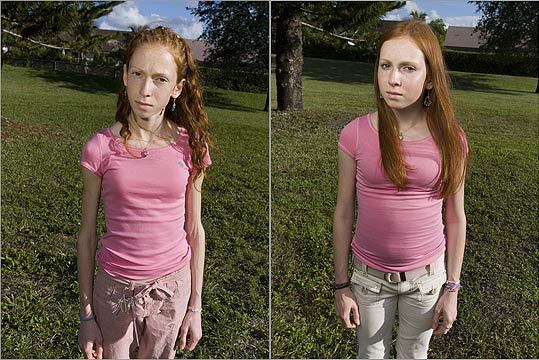
A. The image “narrative” is basically the story that an image tells (similar in some ways to literary or film narrative). An image with a linear narrative is one that has an accessible story line that often follows a “beginning, middle and end” format. Images (or groups of images) with non-linear narratives are more mysterious and open to interpretation. It can be harder to tell what the story is about or where you are in its progression.

The image above by Lauren Greenfield is taken from a series of before-and-after photographs of girls in treatment for eating disorders. They are gripping portraits and serve to document a very specific kind of personal struggle and transformation. They are linear in the sense that we can quickly grasp the storyline. The photograph below, by William Eggleston, is a little harder to decipher. It is also of a teenage girl, standing on a street corner at night, but that is really all that we know. In fact, the only distinguishing visual in this photograph is that the pattern on the girl’s dress is remarkably similar to the brick wall behind her and she is possibly being illuminated by a headlight. This is part of Eggleston’s genius. We are intrigued by this person – her dress, her posture, her gaze – but we essentially have no other information about her (is she a deer in headlights?). To fully understand the complex narrative of this photograph, we would have to look at the other pictures in this series, Dust Belles.

44

Q. What is the normal range of the human eye?

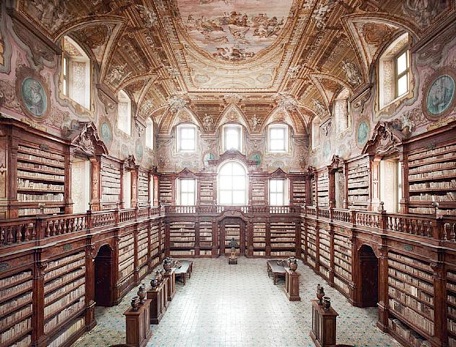
A. For people with 20/20 vision, it is a depth of about 20 ft. and a width (in focus) of about 50-70 mm.  Landscape and architectural photographers are able to show us broad and long views with incredible precision and clarity that are beyond what we could see with our own eyes. This is made possible by the use of a combination of highly specialized wide-angle lenses and manipulation of aperture value to create extreme (in focus) depth of field.

The photograph above is by Candida Hoffer. Hoffer has photographed the interiors of many grand architectural spaces – libraries, museums and places of style and luxury, including palaces and opera houses. These rooms are, however, strangely empty and seem to remain suspended in time as a result. Her treatment of space, color and light is both grand and poetic but we do, at times, get the feeling that we are looking into a gilded cage, or at an exotic bird that will never be let free. We are allowed to look into these detailed interior spaces with uncanny access but they remain, strangely enough, out of reach.

I believe there is a clue to understanding Hofer’s architectural interiors in another of her photographic series of the interior landscapes of European zoos, entitled Zoologische Garten. Unlike her architectural photos, there are living creatures in these idealized, constructed landscapes and her emotional and intellectual narrative is much more accessible. In viewing a variety of exotic creatures in their cages, we become more aware of our interaction with and expectations of interior space, its profound effect on us, and the ways we as an audience willfully engage in visual fantasy. This is an immensely poetic study of the very real tension that exists between reality and our romantic notions of space and time.

45

Q. Why do you think nations at war often confiscate or destroy their enemy’s works of art?

A. The collective soul, identity, and shared history of a nation are debased when art is destroyed.

This is a pre-Islamic work of art destroyed by the Taliban – the castration here is both literal and figurative – an effort made clearly to humiliate and alter the course of history itself.

46

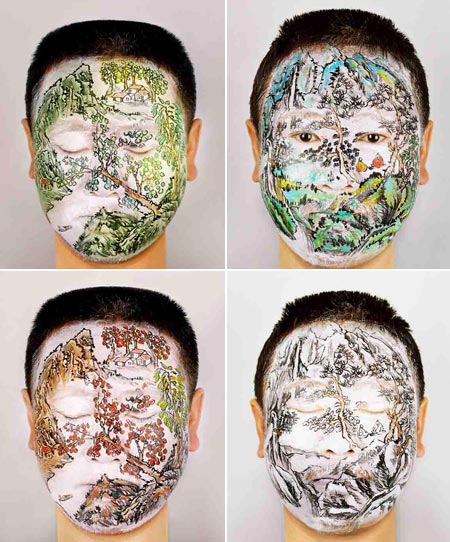
Q. What has this artist done to update a classical form of painting?

A. This is the work of Chinese artist Huang Yan (Four Seasons) who is making an unbelievably innovative and original statement in the tradition of classical landscape painting. By using his own body as the canvas he is contemporizing a traditional form of painting, and making an historical, philosophical, and personal statement about the roots of identity (and, not coincidentally, about Buddhist transience and permanence).  It amounts to a brilliant extension of the history of Chinese landscape painting.

47

Q. How do you know when art is going in a new direction?

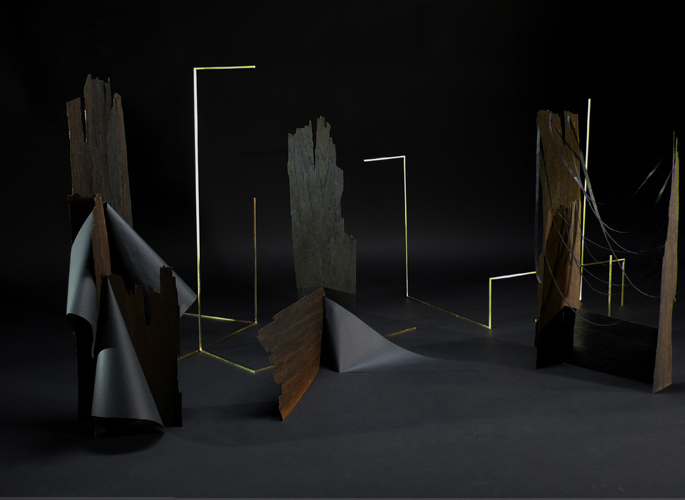
A. When an artist uses materials in new and innovative ways, when they mix mediums, when they work with entirely new subject matter, or when they extend traditional ideas and themes, they are generally considered innovators. The video still above is the work of Bojan Sarcevic (Film 4). Sarcevic is using materials in a highly innovative way and in the piece above he is essentially creating an abstract sculptural (3 dimensional) drawing in film. Sarcevic’s fragile constructs have very complex references and are open to viewer interpretation. These are experiments with the essential components of art making – form, line and volume – and their minimal beauty and fragility are fascinatingly fresh and new.

48

Q. Why do you think these couples might have been attracted to each other?

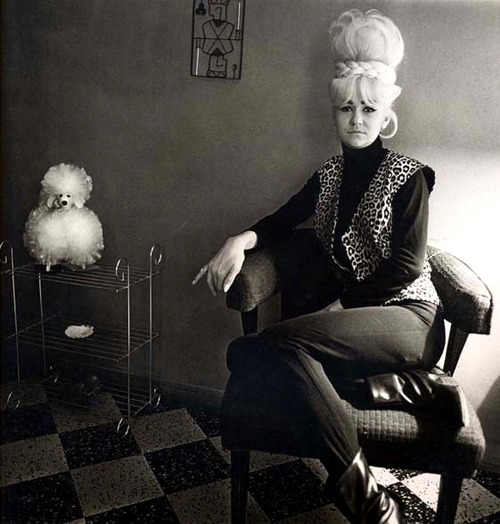
A.Evolutionary biologists suggest that we select our mates based on facial similarity. Could this be the reason why people often look like their dogs?

Diane Arbus

49

Q. This photographer has a special relationship with one of the women in this photograph. Which woman is it and how can you tell?

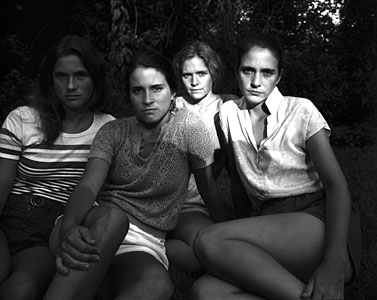
A. For over 40 years the photographer Nicholas Nixon has photographed these four sisters (The Brown Sisters). The woman second from the right, subtly singled out in many of the photographs, is his wife Bebe. In the photograph above, Nixon places his own shadow onto Bebe, and in the photograph below, her face is more prominently lit by sunlight. She also appears very close to the “visual center” of every photograph.

If you view more of these photographs, you will notice that Bebe’s return gaze is somewhat different from her sisters’ (it is more direct and engaged in many of the photographs – she looks into Nixon instead of at him), providing an additional clue to the viewer that she has a more intimate connection with the photographer. These photographs say much about what endures and changes between people and about the nature of love and family (and ultimately about an unshakable marital bond).


50

Q.    This is a self-portrait by the artist Nan Goldin. Do you think she “constructed” this photograph?

A.Constructed photographs are those in which the photographer has intentionally manipulated or “constructed” elements of the picture. Nearly all of fashion photography is highly constructed, for example. The range of approaches to photography is very complex and includes artists, like Gregory Crudsen, who make pictures that are so highly constructed they look more like movie sets than photographs, to street photographers, who tend to take images as they find them.  There are also artists who fall somewhere in between these extremes, like Jeff Wall, whose photographs appear spontaneous when in actuality they are highly stylized and arranged.

Nan Goldin’s approach to photography is generally spontaneous and diaristic. The elegance and power of her work is based in her ability to honestly and un-self-consciously record very personal details about her own life and the lives of the people she is close to.

There is a detail in this image which was intentionally and consciously included, however, which is central to its meaning. This self-portrait is particularly gripping for two reasons. Not only is Nan showing us her face after she has been recently beaten, she decided to contrast this with freshly applied red lipstick, a very powerful symbol of female sexuality and independence . (Red, by the way, is also powerfully symbolic in other ways – it is the color of blood and it is often the color we associate with both love and the devil). By taking her self-portrait after she had applied lipstick, she made her image defiant instead of pitiful. She is, very effectively, sending a message about her ability to survive to the person who beat her, and in doing so she not only asserts her dignity, she triumphs.