100 Questions Designed to Boost Your Visual/Arts Intelligence Quotient

Category: Uncategorized

61

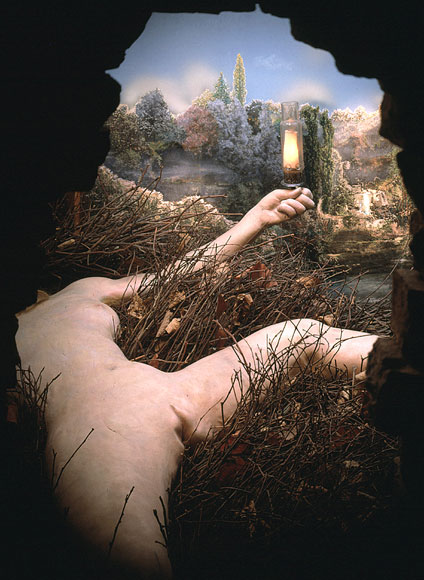
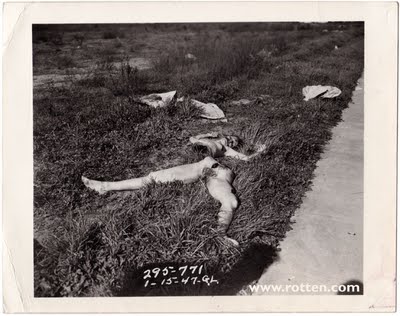
Q. What did one of the most notorious crimes of the 20th century (the Black Dahlia Murder) have to do with fine art?

A. According to Mark Nelson and Sarah Hudson Bayliss, the authors of the book Exquisite Corpse: Surrealism and the Black Dahlia Murder, the killer of Elizabeth Short may have been familiar with surrealist art and ideas and the murder “may have been a deranged attempt to imitate motifs in surrealist art”.

See above, Marcel Duchamp’s etant donnes and below, a photograph of the actual murder scene.
62

Q. Where do you think advertising and fashion meet fine art?

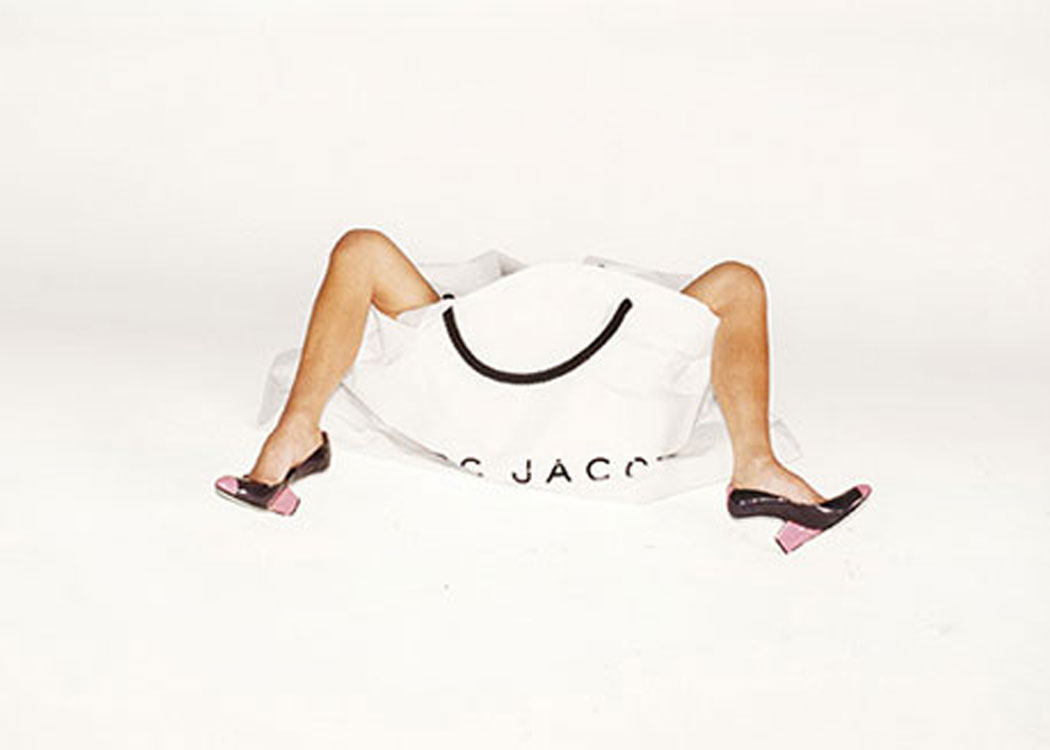
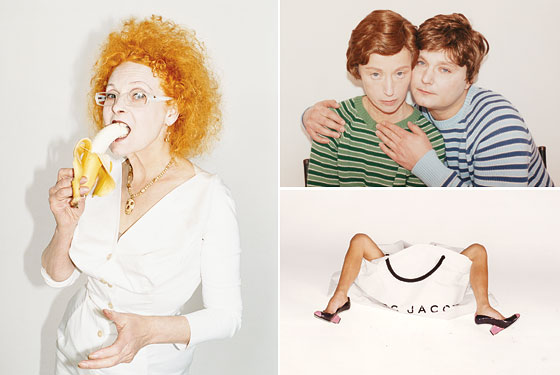
A. This is the work of Juergen Teller for the fashion designer Marc Jacobs. Teller is an incredibly clever artist and has in many ways redefined what we expect from both advertising and fashion. He often pokes fun at models, celebrities and at the idea of glamour and beauty (and at the super rich). In the image above Victoria Beckham has fallen into the designers shopping bag. It’s an interesting play on acquisition – it is not the shopper who has acquired something but the designer. In the images below, Teller is posed with the artist Cindy Sherman and the two play with identity as twins wearing matching MJ sweaters. Sherman takes the narrative of “sameness” to a whole new level by eating what her hair and clothing represent (she is a banana eating a banana). The spread, to my reading, plays with the “monkey see-monkey do” aspect of fashion. Sherman’s work, as noted previously is based in constructed identity and she uses Jacobs’ clothes to develop yet another character for the purpose of commercial and social satire (and to play dress up, or “make believe,” which is the point – that fashion can help us endlessly reinvent ourselves).

63

Q. What is the most inventive use of type you have ever seen?

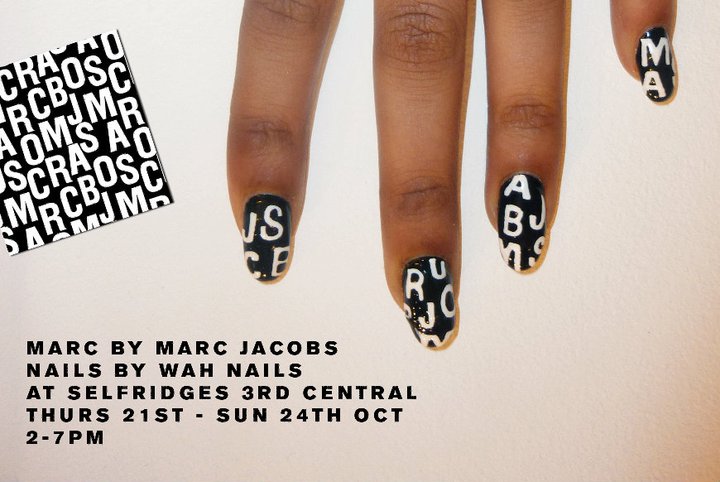
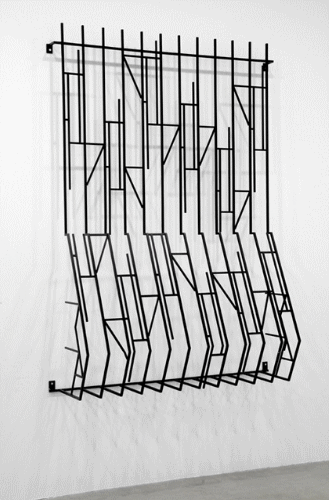
A. The interesting thing about type is that there are an infinite number of ways that it can be modified to communicate messages. Take a look around at logos, signs, books, documents, business cards, and web designs and see if you can find examples of effective and ineffective uses of typology. Below, see the announcement for a show of Martin Boyce’s work and below that, a piece by Martin Boyce.

64

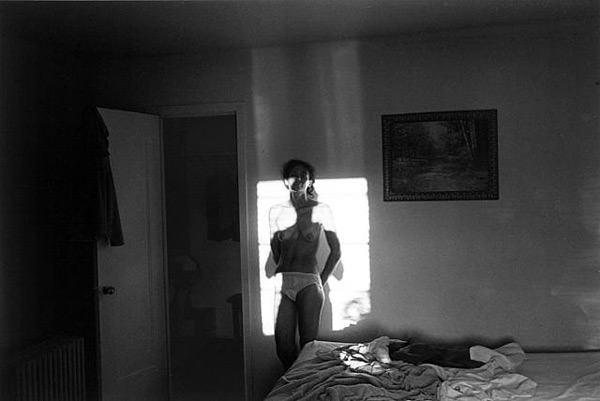
Q. What is happening in this photograph?

A. Look carefully and you will see that the photographer, Lee Friedlander, has placed his own shadow on to his wife Maria. Friedlander is a master photographer whose compositions frequently involve shadows and reflections. This is a very complex portrait about intimacy, shared experience, and shared destiny.

The photograph below, also by Lee Friedlander, is of a cut out couple in a plate glass window. The reflection of the parking lot and setting sun tells a very different story here about social and personal artifice.

65

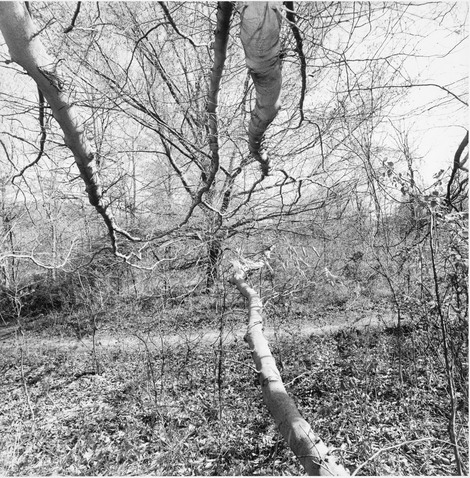
Q. Why do you think tree shapes are so interesting?

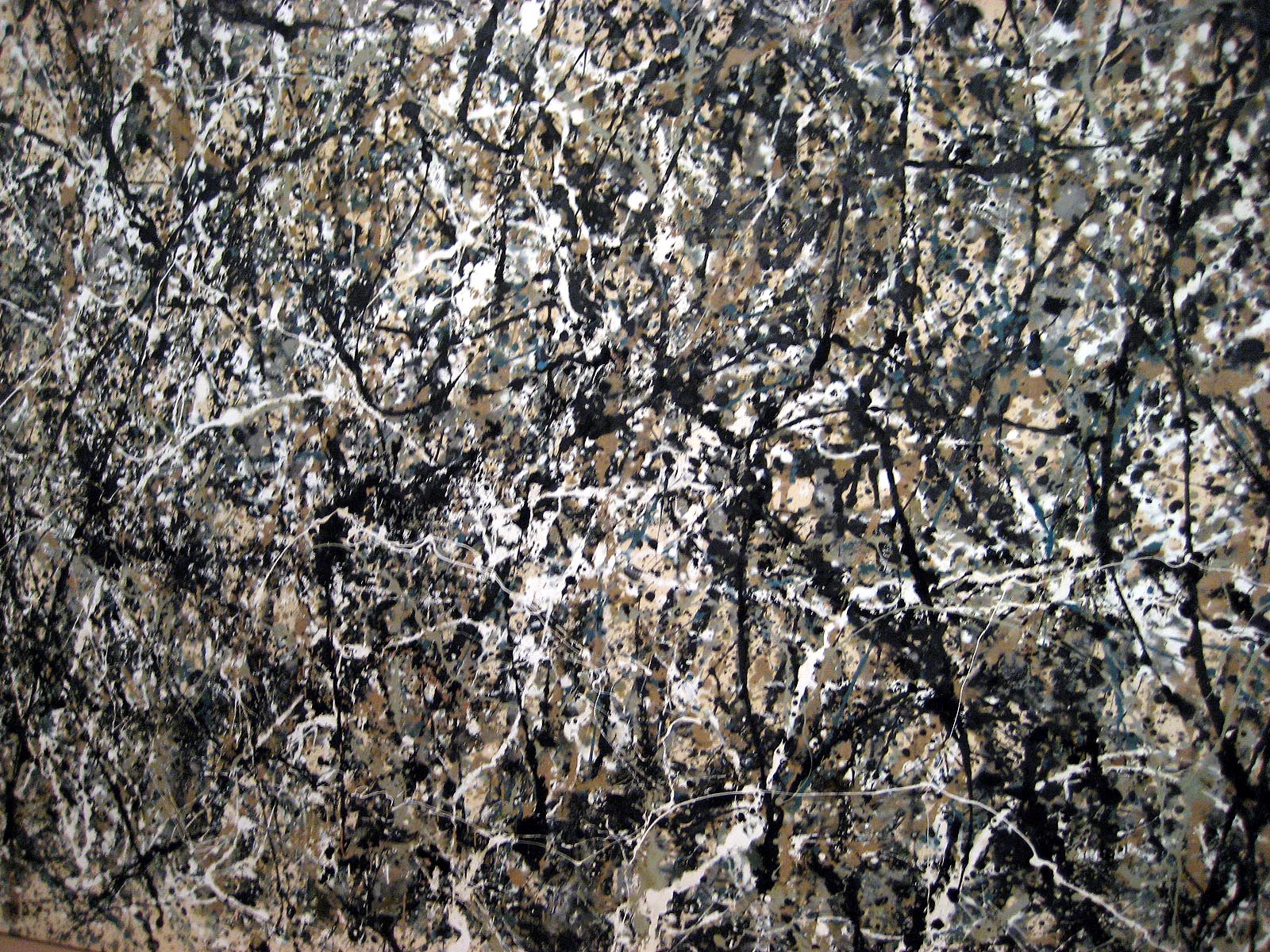
A. Because they are essentially geometric shapes that repeat at different scales according to fractal patterns – as are snowflakes, ferns and many other endlessly interesting natural shapes. Researchers have studied abstract painting and found that successful abstractions often follow fractal patterns. This is probably why they seem to make intuitive compositional sense despite the fact that they break all of the normal compositional rules. Variation on repetition is a common intellectual and physical approach to art making. Personally, I don’t think it is necessary to legitimize abstract painting with a scientific explanation. Abstraction was simply the natural progression of painting as an art form.

66

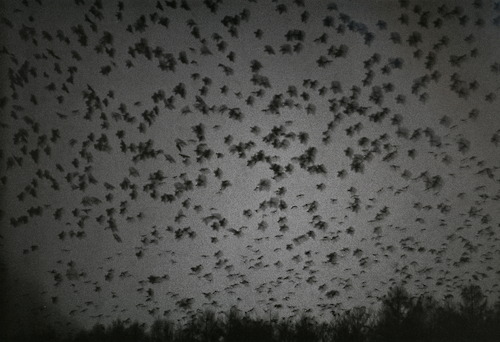
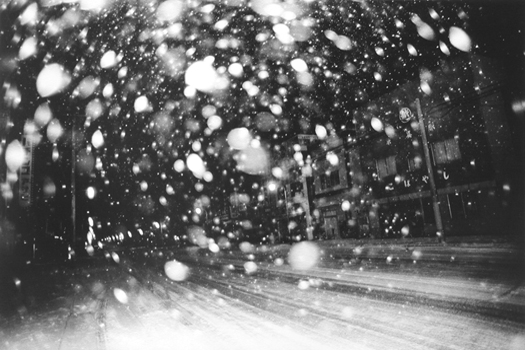
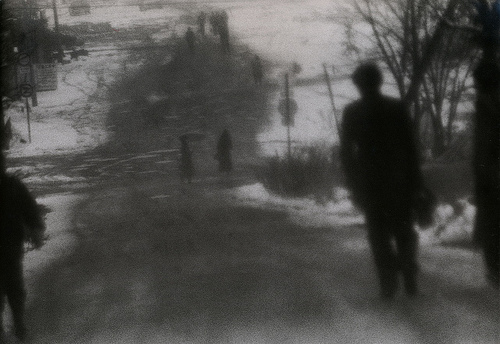
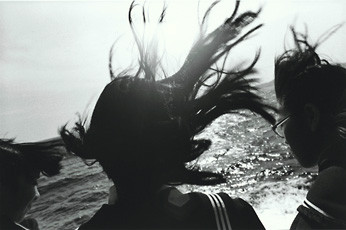
Q. These photographs are included in the book The Solitude of Ravens by Masahisa Fukase.  Although the photographs below are not of birds they are part of this body of work. How do they extend the artist’s narrative about ravens?

A. This is a difficult task and may require you to look at a larger group of photographs in this series. Basically, Fukase’s ravens are visual code for personal loss, profound loneliness, and a sense of personal foreboding. Ravens have a psychic as well as literal presence throughout this body of work. Fukase extends our understanding of his psychic state by turning snow, the hair of young girls, and the formless bodies of people walking down a snowy street into moving, birdlike, shapes. His world is full of black birds and we feel at times in viewing them as if they might fly off the page and into our rooms. This is how images work together to extend and deepen visual narrative.


67

Q. What is a pictogram? 

A. Pictograms are pictures that are used to convey information in a concise visual format (for example, think of the small airplane symbol that is used to indicate an airport is near or the male and female figures that guide you to the restroom). As described by Dona M. Wong in the Wall Street Journal Guide to Information Graphics, “simple icons, free of detail, that remain crisp and coherent when reduced to a small size” actually communicate a great deal, as the pictograms above demonstrate.

68

Q. What’s a typology?

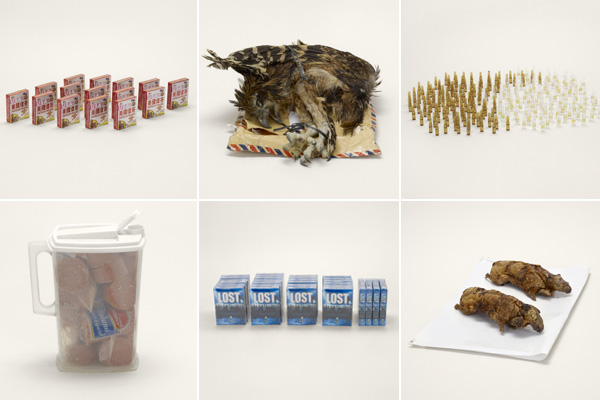
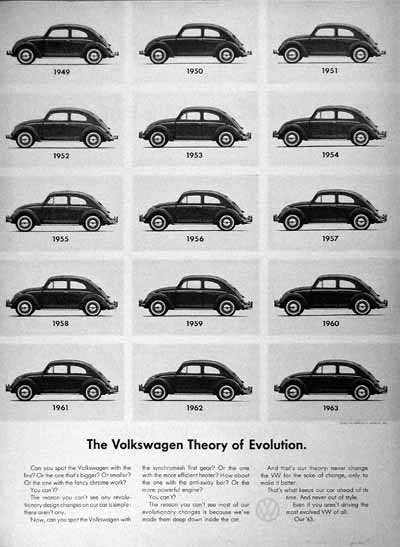
A. Photographic typology is a way to study, classify, and categorize things that are similar. It also helps to show a range of variation in like things.

In the 1960’s, Bernd and Hilla Becher began photographing industrial structures of all kinds (water towers, furnaces, gas tanks, silos, etc.) which were rapidly being dismantled. They recorded, with incredible precision, the many grand and minute similarities and differences in these structures, and a strangely beautiful but vanishing industrial landscape.

Recently, Taryn Simon created a fascinating typographic study, called Contraband, of items confiscated by customs at JFK airport. Probably the weirdest and most unusual array of items you will ever see.

You may see more typologies in a day than you realize. As seen below, they are often used by advertisers.

69

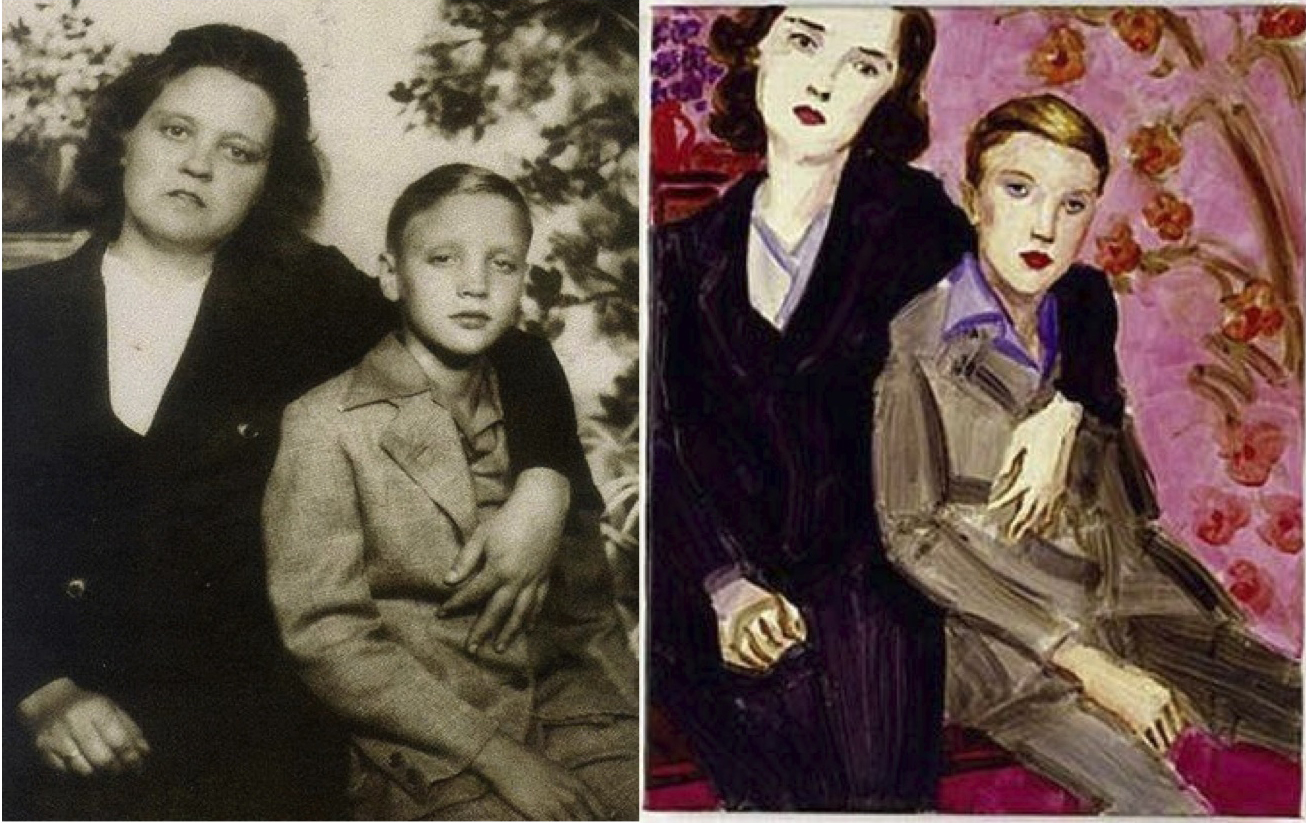
elvis and mama

Q.  This is a famous photograph of Elvis and his mother Gladys and a re-interpretation of that photograph by the painter Elizabeth Peyton. What did Peyton do in her painting to help us better understand the relationship between Elvis and his mother?

A. Most importantly, she changed the posture of their bodies so that Elvis leans into Gladys a little more than he does in the original photograph. In Peyton’s version both figures are slimmer, Gladys appears younger and Elvis appears just a bit older and taller (but less tough). Also, she has changed the background to make it appear that the two are sitting in a wonderful private garden instead of in front of a staged backdrop. Peyton’s signature small, red lips also make them look a little like sweethearts. These changes create a strong narrative that is consistent with what we know about Elvis’ relationship with his mother, that the two were unusually close and devoted and often interacted more like siblings than like mother and son. Elvis was by many accounts a mama’s boy and Peyton has made carefully studied adjustments to call this out.

70

Q. What is an outsider artist? 

A. The term “outsider” has been given to artists who make works that are outside the mainstream art world and who usually lack formal training. They are often socially marginalized in some way and many have created work in institutional settings like psychiatric hospitals and prisons. They often create elaborate fantasy worlds as a means of personal expression.

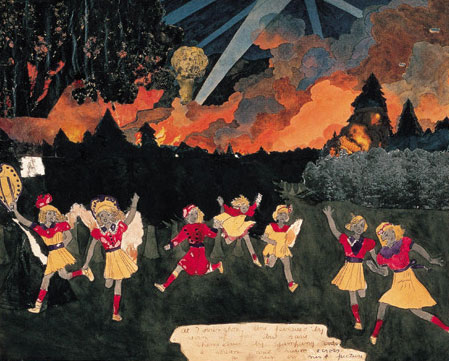
This is the work of Henry Darger, an untrained “outsider” artist who worked as a janitor for most of his life and was said to have had only fragile connections to the outside world. His many elaborate and haunting drawings were discovered after his death. Darger traced images from a variety of sources, including magazines and newspapers, and combined these traced images to create new and distinct drawings with new narratives. Through this simple technique he was able to create a stunningly original, elaborate and sometimes disturbing story involving an imagined group of girls he called the Vivian Girls.

Outsider artists are often classified as folk artists, but this classification may actually work against full recognition for their contribution to the world of fine art. What is important is that anyone, regardless of formal training, can, based simply on their own initiative and desire to communicate ideas and experience, create important and profound works of art.